
Abstract
This paper shows how Bronislaw Knaster’s sharing procedure – inspired by Hugo Steinhaus’ work on the “divide and choose” sharing method, can be translated into an auction procedure.
Hugo Steinhaus (1948), a prominent Polish mathematician of the Lviv-Warsaw School, was the first to formalize and extend the ancient “divide and choose” method (appearing in the Bible and Greek mythology) in a rigorous way. The mechanism is the following: one person (the cutter) divides the resource into two parts they perceive as equal. The second person (the chooser) picks their preferred piece. Thus, the cutter is guaranteed to get half of the value (by their own estimation), and the chooser is guaranteed at least half (and potentially more if their tastes differ from the cutter’s). Steinhaus noted that this procedure is “subjective,” it doesn’t require an external judge or a “true” market value; he mentioned it as realizing “fairness through self-interest.” One could also say that it is a procedurally decentralized mechanism.
As Steinhaus was unable to find a simple solution to move to more than 2 participants, he shared his problem with two of his colleagues, Stefan Banach and Bronisław Knaster. Banach and Knaster soon found an elegant solution to the n participant problem. Encouraged by this success, Knaster looked at the sharing of indivisible goods (like a house or a car in an inheritance). Needless to say that sharing indivisible goods is a problem that has haunted humanity for a long time. When King Solomon ensures justice prevails by suggesting to cut the baby – claimed by two mothers – his bluff leads to allocate (or “share”: 0,1) an indivisible good.
Knaster (Steinhaus, 1948) proposed a “sealed bids” method:
- Each person writes down their secret valuation of the item.
- The person with the highest bid wins the item.
- The winner then compensates the others with cash added to their own valuation.
Suppose that Alice and Bob have to share a wardrobe that Alice values 1000 whereas Bob values it at 800. Bids are secret — participants write their valuation on a piece of paper hidden to the other. Equal entitlements assumed (50/50), the “participation” of Alice is 500, the “participation” of Bob 400. The rule is the following: 1) The one who made the higher estimate gets the good (Alice gets the wardrobe), 2) Alice gives Bob the 400 corresponding to what he thinks he is entitled to, 3) Alice divides the surplus (100) by 2, and gives 50 to Bob. Thus, Alice will have paid 450 for a wardrobe she estimated at 500, and Bob will have obtained 450, that is 50 more than his own estimation. As in the divide and choose procedure, everyone is assured to get at least what they estimate to be their fair share.
The Knaster procedure can be seamlessly translated into an auction procedure. The seller sets a minimum amount they would accept. Participants make a secret bid representing the maximum they are ready to pay (which can be done online). The highest bid (higher than the minimum accepted by the seller) prevails, and the sale is triggered at a price equidistant between the highest bid and the seller’s requested amount. In other words, the price to be paid by the highest bidder will be their own price plus the seller’s price, divided by 2. The structural parallel with the Knaster method aligns this auction procedure with the divide-and-choose approach: everyone has the guarantee to get at least what they wish. Here, seller and buyer are assured to get a price equal or better than the one they have mentioned.
Of course, this sharing type of auction does not solve all the “friction” problems raised by other auction systems, such as information asymmetry, the winner’s curse, or strategic thinking, but it mitigates these effects. The optimal strategy is simply to bid one’s true maximum value, and by following it, bidders may get a surplus. One possible drawback of the sharing auction is that the transaction may not happen (if the highest bid is below the seller’s demand), but this is a drawback frequently found, in one way or another, in auctions. It can be bypassed by announcing the seller’s price.
Hugo Steinhaus took the “social friction” out of sharing. His work established that procedural justice – where the rules are so well-designed that participants naturally achieve fairness through self-interest – could replace the need for a central authority (Moessinger, 1998). This remains a cornerstone of modern decentralized theory, from maritime law to blockchain governance. The sharing auction, derived from his work, removes some bidding stress, inefficiencies, and perceived unfairness.
References
Moessinger, P. (1998) Décisions et procédures de l’accord. Paris : Presses Universitaires de France.
Steinhaus, H. (1948), The problem of fair division, Econometrica, 16, 101-104.


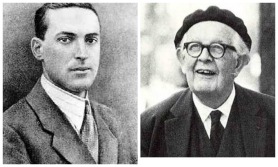

 Pierre Moessinger